
🌍 The Community Edition: Daemons, Agent Users, and AI-Native Chapters
March 6, 2026


It’s Friday, March 6th: This week, we’re looking at what happens when agents become the main interface for work and software. Miessler’s “Great Transition” has your daemon broadcasting your skills while Beltramelli argues your real users are agents hitting your APIs, not people in dashboards. On the ground, Costa del Sol is trialing AI at work in public, and Paris is turning its chapter into an applied‑AI lab by getting attendees to ship and share their own experiments.


Head over to our Events Portal to get the latest on upcoming AI Collective events near you. Search by city, date, or event format, and join thousands of builders at events across 100+ chapters on every continent (except Antarctica, for now).
🌁 Based in SF? Check out SF IRL, MLOps SF, GenerativeAISF, or Cerebral Valley’s spreadsheet for more!

1️⃣ The Great Transition: From Jobs to Daemons
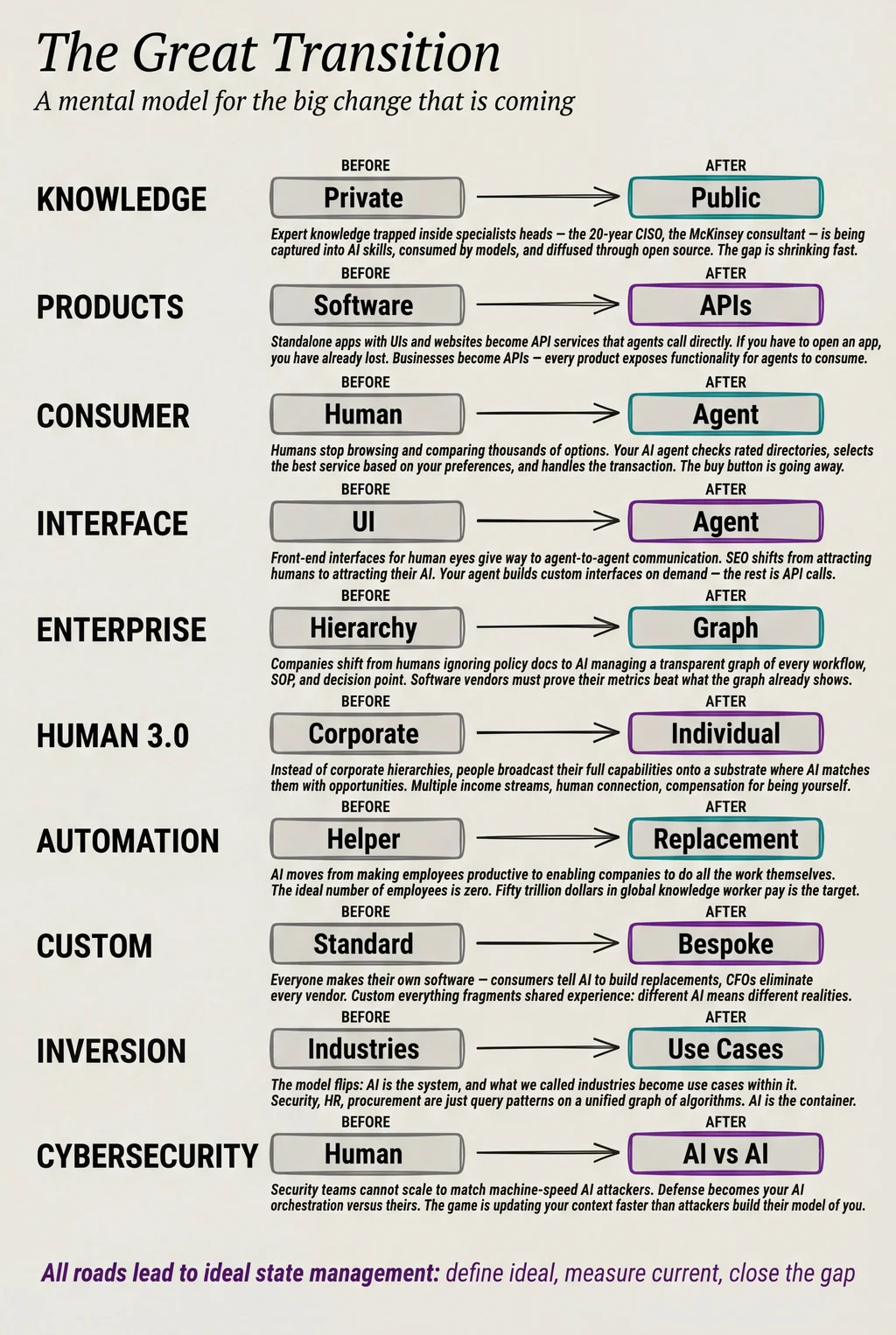
Daniel Miessler argues that what looks like disconnected chaos in AI, work, and software is actually one Great Transition: knowledge, products, and companies are all being re-written around agents and APIs. Specialized expertise that used to live in one person’s head is getting captured into skills and open models, so the gap between elite consultants and everyone else keeps shrinking. As software turns into APIs and MCP tools, consumers fade into the background while their agents pick services from giant rated directories and wire them into workflows. Inside companies, AI starts to own the graph of SOPs and tools, with humans shifting from “doing the work” to editing the algorithms that run the business.
Why it matters: If the ideal number of employees for a company tends toward zero, then the “job” becomes broadcasting your daemon, a live, machine-readable profile of your skills, reputation, and preferences, into a global marketplace where agents match work to people in real time. In that Human 3.0 world, the winners aren’t not going to be the ones clinging to corporate ladders, but the ones who can articulate their capabilities, plug into agent-first platforms, and let orchestration systems route them opportunities. For AI-native builders, this is the design space: directories of services instead of landing pages, SOP graphs instead of org charts, and products that assume their primary user is an orchestration layer, not a human with a browser tab.
2️⃣ Your Next “User” is an Agent, Not a Human
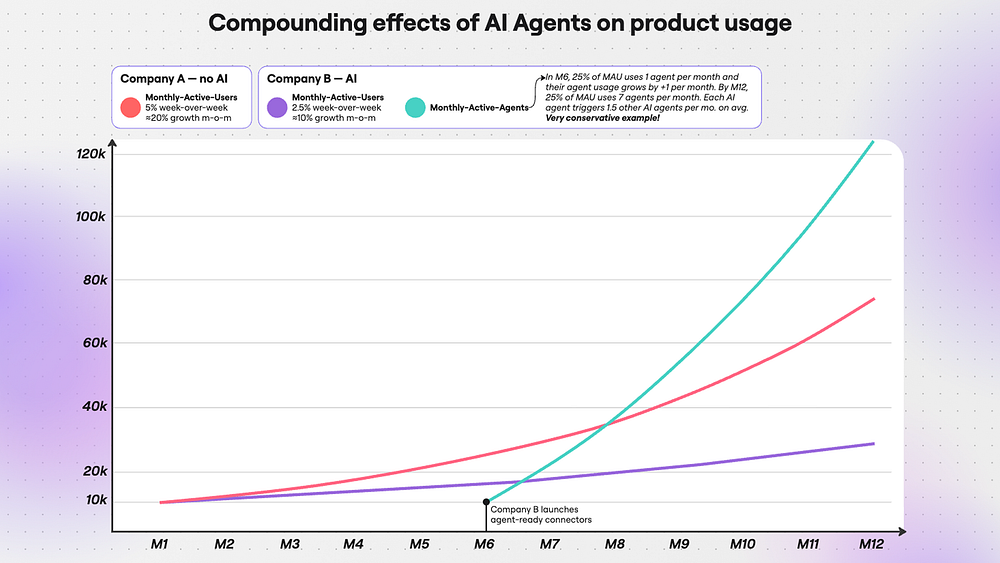
Tony Beltramelli makes a blunt claim: DAU/MAU has quietly stopped telling us where the value is, because the real users of SaaS are about to be AI agents. In an agentic workflow, a developer says “fix this bug and update the ticket,” the agent writes the patch, opens a PR, hits the MCP server for the tracker, updates status, and posts to Slack. All without a human ever logging into the UI. That breaks the seat-based world: one human can now spin up hundreds of agents, which means Monthly Active Agents (MAA), agent cohort retention, and per-agent or usage-based pricing become the metrics that actually track product-market fit.
Why it matters: Designing “for agents” means treating your API as the real UI, exposing rich, scriptable objects and building MCP servers so external agents can treat your product like infrastructure, not a website. Internal agents (like Miro Sidekicks) are a nice signal, but external agents that teams build on their own time are the proof you’ve become a platform, not just a tool. For startups and incumbents, the question shifts from “how many humans logged in this month?” to “how many workflows depend on us so deeply that ripping out our integration would hurt?” That’s the bar AI-native products now have to clear.

Each week, we highlight AI Collective chapters doing groundbreaking work with their members around the world. Tag us on socials to be featured!
🌊 Costa del Sol | Practical AI at Work
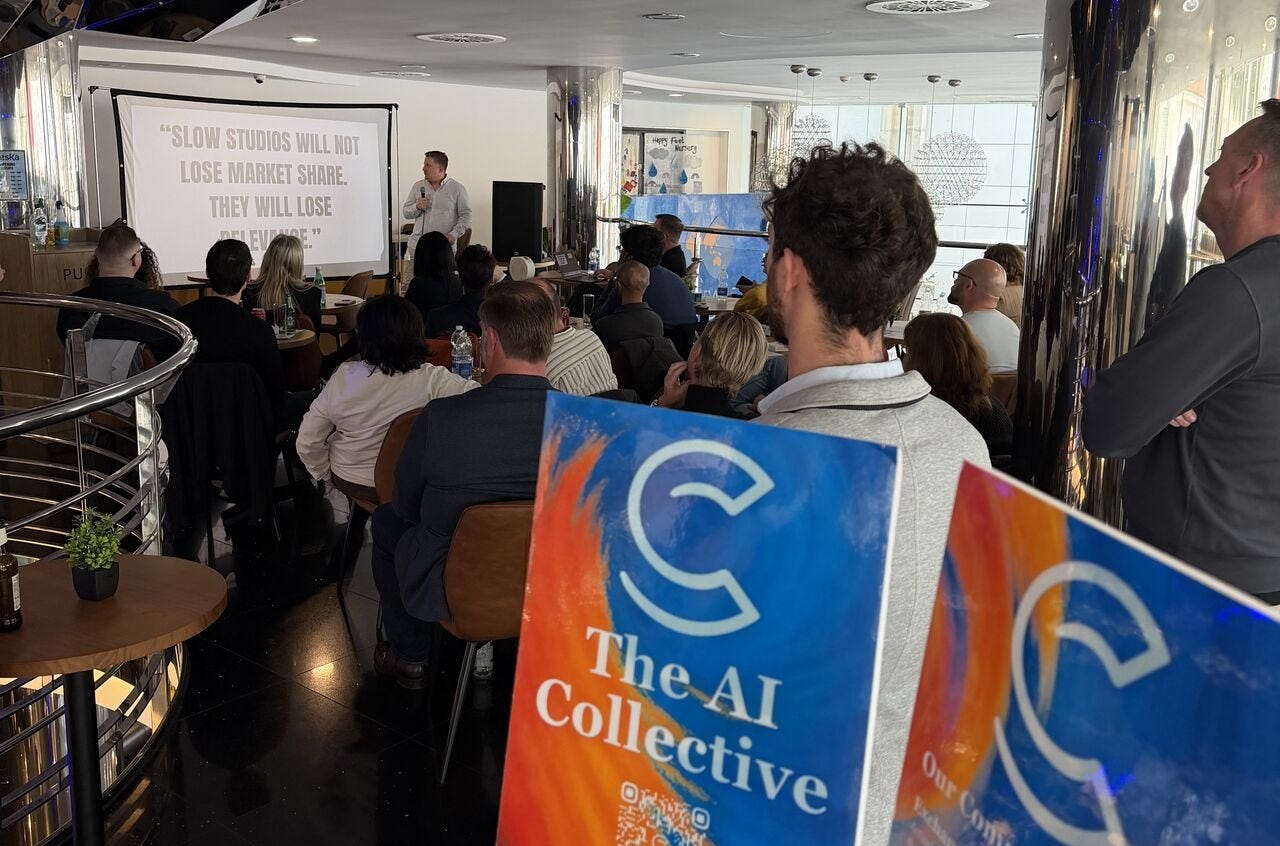
The World Trade Center Gibraltar recently hosted over 40 professionals for an unfiltered look at how AI is transforming real-world workflows. Moving past the hype, the event focused on honest, practical applications from leaders currently building and testing AI solutions. Event highlights:
The Venue: Hosted at the World Trade Center Gibraltar, the night featured a high-quality room of builders and operators.
The Focus: Four core sessions covered AI performance blueprints, rebuilding CRMs with native AI, creative workflows, and the impact of attention design in iGaming.
The Atmosphere: Eschewing grand predictions for “what’s working now,” the event prioritized “real-talk” over buzzwords.
The applied AI takeaway: The shift in the industry is moving from "AI as a prediction" to "AI as a utility." The most immediate ROI isn't coming from broad LLM chat interfaces, but from surgical integrations: rebuilding CRM logic with native AI, automating specific creative assets, and using AI to manage real-time attention design. The goal is to identify existing workflows that have "survived contact" with users and use AI to remove the friction points within them.
🇫🇷 Paris | Scaling Community Through Europe’s Largest Voice AI Hackathon
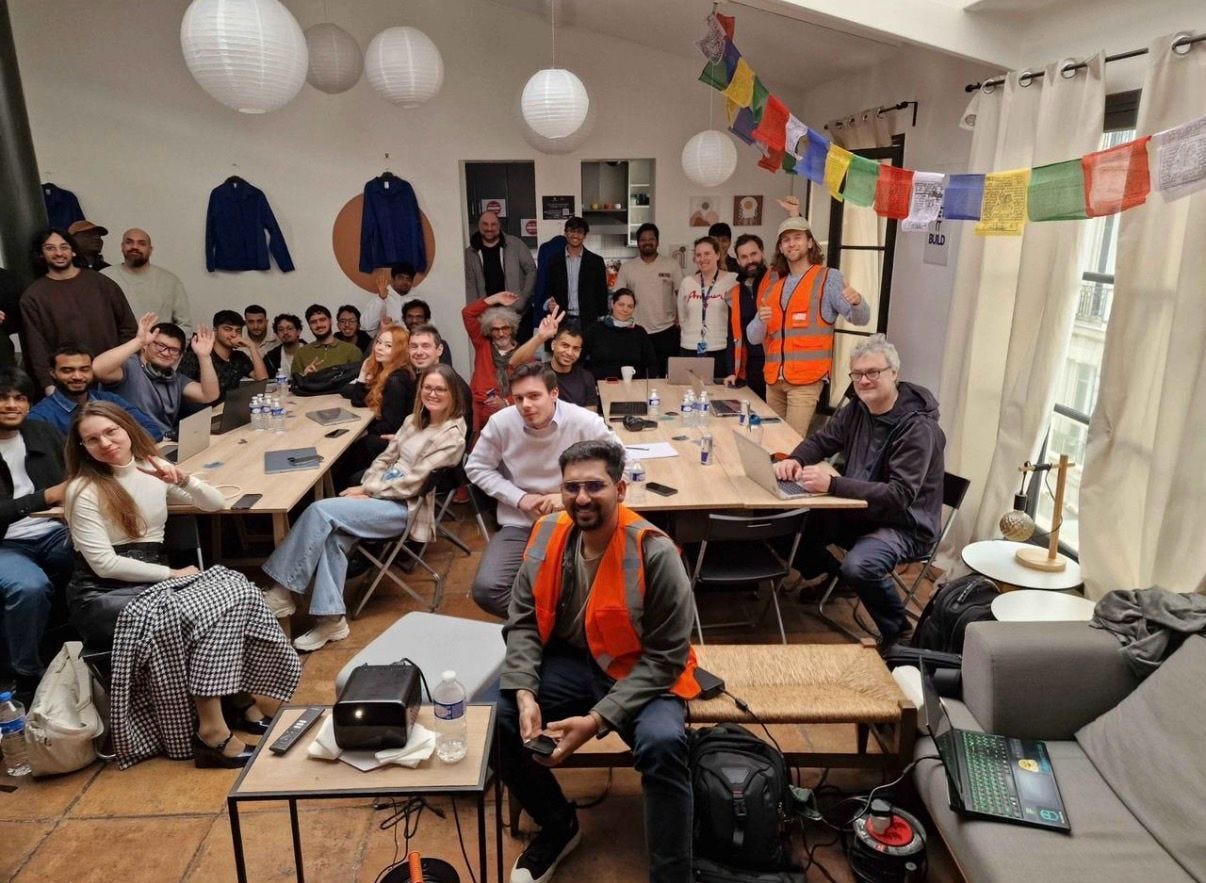
The AI Collective Paris has evolved from a one-man operation into a self-sustaining community hub. Last weekend, the team—now led by Sylvain Cordier, Victoria Michaux, and others—hosted the Activate Your Voice hackathon in partnership with Speechmatics. Event highlights:
Scale: 100+ builders, a €100,000 prize pool, and support from OpenAI and Builders Factory.
Winner (Comm. & Human Experience): Sound and Syntax – MemoryBridgeAI (also won the Community Vote).
Winner (Business Automation): Med Voice, focused on healthcare voice integration.
Winner (Asterix): Team Aria, Faraz Akhtar, and Ponni Muthukumarasamy.
The applied AI takeaway: This event demonstrated that the barrier to building complex, functional voice agents has dropped significantly. When builders are given the right infrastructure, like high-quality speech-to-text APIs and low-code orchestration layers, they can move from concept to a working deployment in under 24 hours. The real value is in how it is integrated into specific industry workflows like healthcare automation and human-experience design.
Our Premier Partner: Roam

Roam is the virtual workspace our team relies on to stay connected across time zones. It makes collaboration feel natural with shared spaces, private rooms, and built-in AI tools.
Roam’s focus on human-centered collaboration is why they’re our Premier Partner, supporting our mission to connect the builders and leaders shaping the future of AI.
Experience Roam yourself with a free 14-day trial!
➡️ Before You Go
Partner With Us
Launching a new product or hosting an event? Put your work in front of our global audience of builders, founders, and operators — we feature select products and announcements that offer real value to our readers.
👉 To be featured or sponsor a placement, reach out to our team.
The AI Collective is a community of volunteers, made for volunteers. All proceeds directly fund future initiatives that benefit this community.
Stay Connected
💬 Slack: AI Collective
🧑💼 LinkedIn: The AI Collective
𝕏 Twitter / X: @AICollectiveCo
Get Involved
About the Authors
About Joy Dong
As a partner at Ownly, Joy engineers AI automation and business solutions that streamline operations for small businesses. A former educator turned media strategist, she specializes in making complex systems accessible. Through her newsletter, TEA, she provides the strategic clarity needed to bridge the gap between emerging technology and practical, real-world growth.
About Noah Frank
Noah is a researcher, innovation strategist, and ex-founder thinking and writing about the future of AI. His work and body of research focus on aligning governance strategies to anticipate transformative change before it happens.